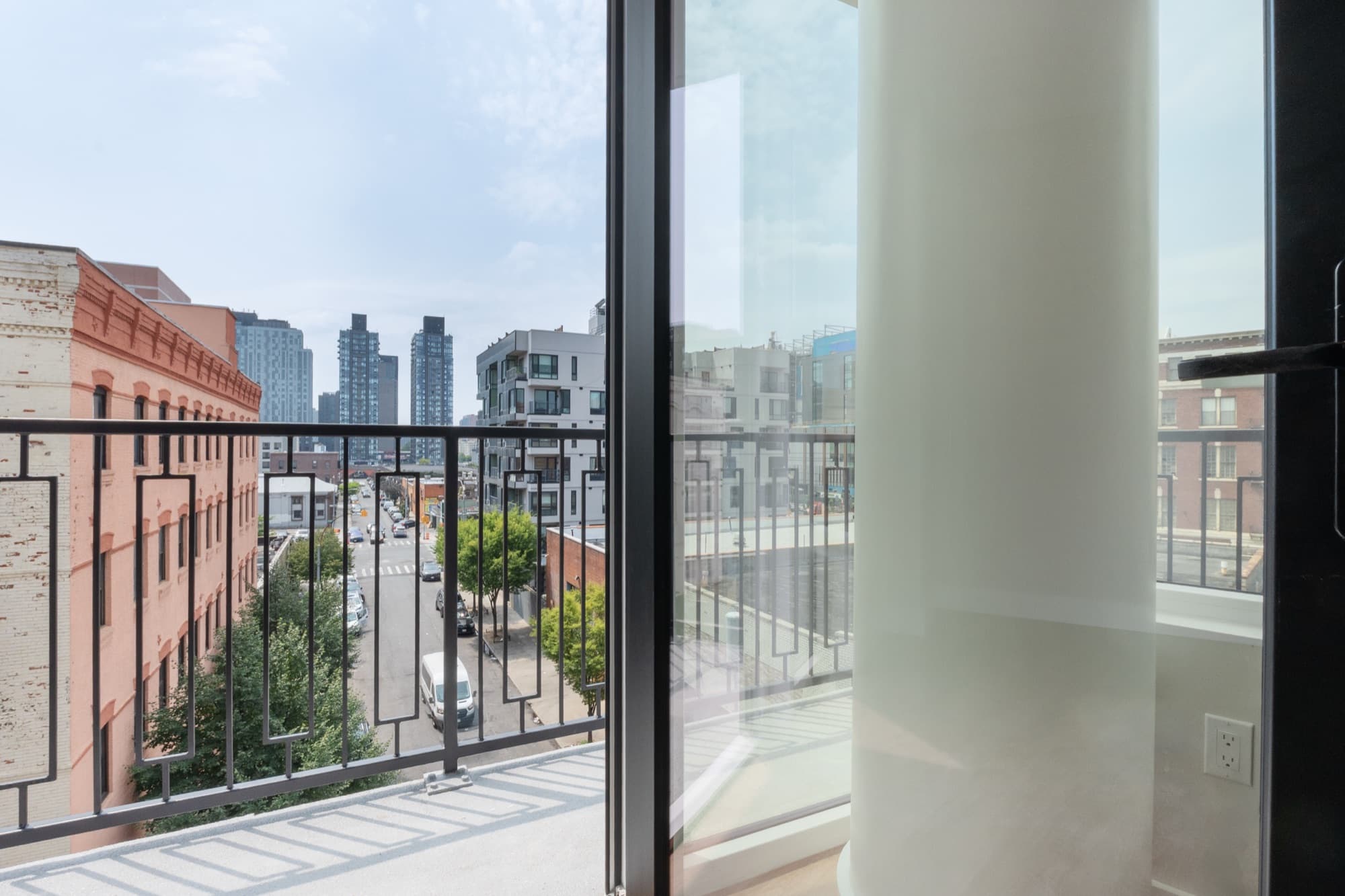
A residence at The Astelle with oversized windows framing the Mott Haven streetscape, the neighborhood seen from inside the building

The neighborhood

A home in the Piano District.

The Astelle stands at 286 Rider Avenue in Mott Haven, the corner of the South Bronx where the 6 train reaches Manhattan in minutes, the Harlem River bends toward the bridges, and the brick of a piano-making century still lines the streets.

Where the Astelle sits

The corner where the Bronx meets the river.

The Astelle occupies 286 Rider Avenue in Mott Haven, the southwest corner of the South Bronx, a few blocks in from the Harlem River and the bridges that carry the neighborhood into Manhattan. This is the oldest, most walkable part of the borough: a flat grid of red brick, low rooflines, and 19th-century streets laid out long before the towers arrived. It is also the bottom of the Bronx, geographically closer to Midtown than much of Brooklyn or Queens, which is why renters trading up on space and price keep finding their way here.

It is a neighborhood with a center of gravity. Bruckner Boulevard and Alexander Avenue draw the dining and the galleries; the 6 train at 3 Av-138 St draws the commute; St. Mary's Park draws the morning run. Everything an affluent renter actually uses day to day sits within a short walk or a single train, and the river is never far from view.

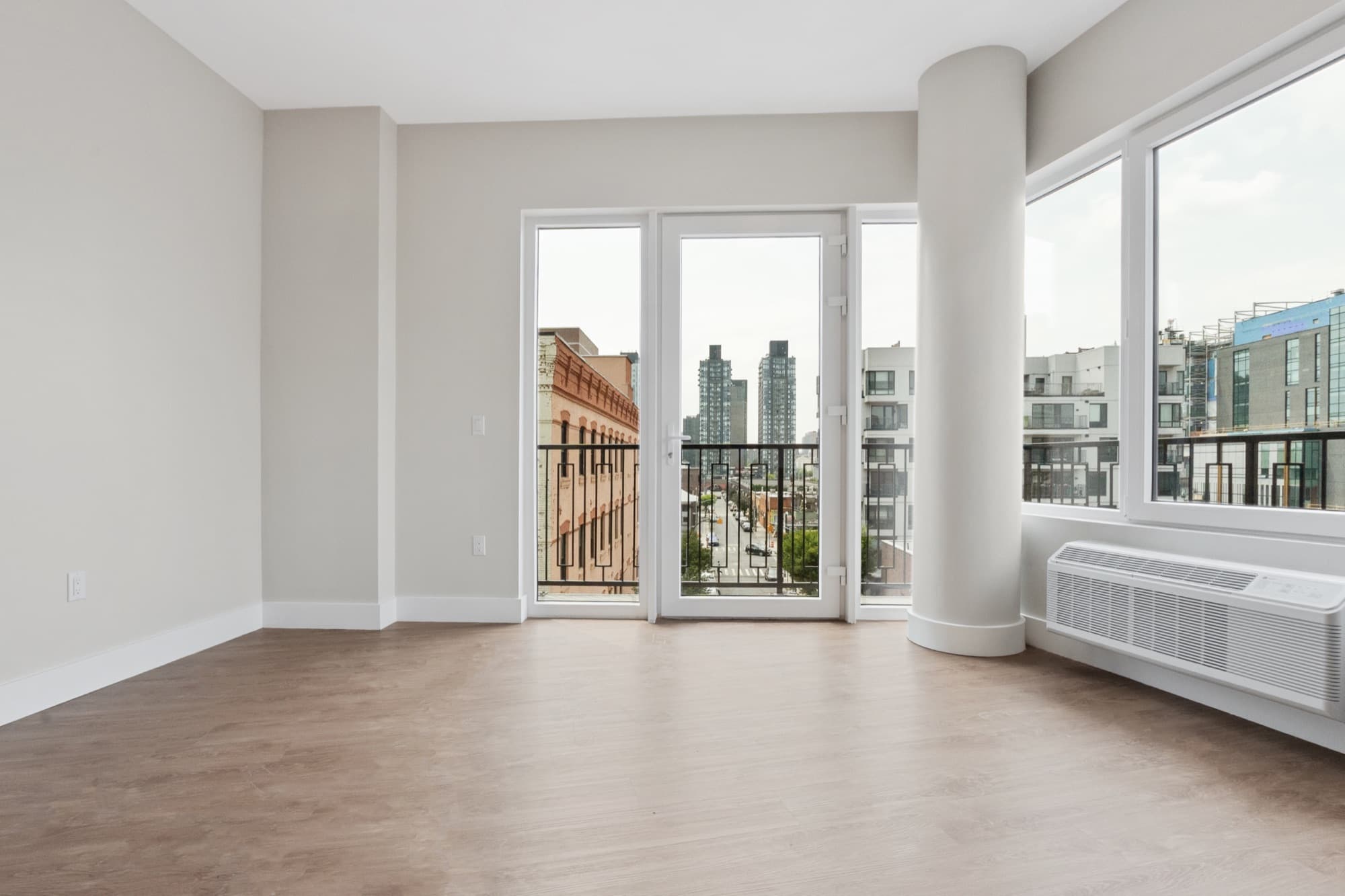
Above the street, the residences turn that geography into light: oversized windows oriented to hold the long South Bronx sun, and select balconies that step out over the brick. The neighborhood is the reason the building looks the way it does.

At a glance

Address
286 Rider Avenue, Bronx, NY 10451
Neighborhood
Mott Haven, South Bronx
Nearest subway
6 train at 3 Av-138 St, a short walk
Commuter rail
Metro-North at Melrose, Harlem Line to Grand Central
Nearest large park
St. Mary's Park, the South Bronx's largest
Architect
Fischer Makooi Architects

Getting around

Manhattan, a single train away.

The question every renter asks first is whether the commute is a chore. In Mott Haven it is not. The 6 train runs straight down the East Side of Manhattan from a station a short walk from the door, and a Metro-North line gives the address a second, quieter way into Midtown.

The 6 train, Lexington Avenue local

3 Av-138 St

The 6 train, Lexington Avenue local

The nearest station, 3 Av-138 St, sits a short walk from the building and is served by the 6, the Lexington Avenue local. It runs 24 hours a day and carries you in one seat down the East Side of Manhattan, stopping at the Upper East Side, 59th Street, Grand Central, and Union Square before continuing toward Lower Manhattan.

Manhattan stops on the 6, heading south

  • 125 St
  • 86 St
  • 68 St - Hunter
  • 59 St
  • 51 St
  • Grand Central - 42 St
  • 23 St
  • 14 St - Union Sq
  • Astor Pl
  • Brooklyn Bridge - City Hall

Stops shown in order south of 3 Av-138 St; the 6 continues to Brooklyn Bridge-City Hall. Travel times vary by time of day, so check the live MTA trip planner for your route.
Also nearby

The 4 and 5 trains

A few blocks west, 138 St-Grand Concourse adds the 4 and 5 express trains, a second route into Manhattan and a faster ride to the Upper East Side and Brooklyn when you want it.

Commuter rail

Metro-North at Melrose

The Harlem Line stops at Melrose, a walkable Metro-North station that reaches Grand Central in about fifteen minutes, a premium, sit-down way into Midtown on the mornings that call for it.

On foot and on two wheels

Bikes, paths, and the river

The Randall's Island Connector, a pedestrian and bike bridge open since 2016, links the neighborhood to the fields and paths of Randall's Island. Along the water, an emerging Harlem River greenway is in active city planning to reconnect the Bronx to its waterfront.

By car

Bridges and the Deegan

For drivers, the Third, Madison, and Willis Avenue bridges put Manhattan minutes away, and the Major Deegan Expressway opens the route north to Westchester and the rest of the region.

Eat, drink, and gather

A real neighborhood table.

Mott Haven is not a food desert dressed up for a brochure; it is a living scene with a few genuine anchors and a growing cast of cafes and counters around them. Below are the verified, walkable places worth knowing first, from a piano-factory bar to the Bronx's only independent bookstore.

Charlie's Bar & Kitchen
New American cooking with Latin and Southern soul, set inside the 1886 Clock Tower, the oldest standing piano factory in the Bronx. Live jazz on Mondays, and a room that wears its history on the brick.
Alexander Avenue at Bruckner Boulevard
La Morada
A family-run Oaxacan kitchen with a nationally praised rainbow of moles and deep roots in the community. The kind of restaurant a neighborhood is lucky to have, and the reason many people first come to Mott Haven.
308 Willis Avenue
The Lit. Bar
The Bronx's only independent bookstore, and a wine bar besides. A warm, much-loved room for readings, a glass, and an afternoon among the shelves, opened in 2019 and a neighborhood institution already.
131 Alexander Avenue
Beatstro
A hip-hop-rooted restaurant with a Latin and Southern menu and a weekend Beats and Brunch, a nod to the borough that gave the music its start. Loud in the right way, and built for a long table.
135 Alexander Avenue
Mott Haven Marketplace
A food hall and specialty grocer with a deli, espresso, and a wine and liquor counter under one roof, an everyday resource for the neighborhood when you want good things close to home.
445 Gerard Avenue, at The Estela

Parks and the river

Room to breathe, close to home.

Outdoor space is built into the geography here. The largest park in the South Bronx is nearby, a pedestrian bridge opens onto hundreds of acres of fields, and the city is at work reconnecting the neighborhood to its own riverfront.

St. Mary's Park
At 35 acres, the largest park in the South Bronx, with a dog park, an indoor pool, a running track, ball courts, and playgrounds set across rolling, tree-shaded ground. The everyday answer to where you run, walk the dog, and breathe.
Randall's Island
Across the Randall's Island Connector, a pedestrian and bike bridge open since 2016, lie hundreds of acres of athletic fields, waterfront paths, and festival grounds, a vast outdoor room a short ride from the door.
The Harlem River waterfront
Along the western edge of the neighborhood, the city is advancing plans for a Harlem River greenway to reconnect the Bronx to its waterfront. It is emerging rather than finished, but it points to where Mott Haven is headed.

Art, history, and the Piano District

The building is made of the neighborhood.

The Astelle is red brick and oversized windows because Mott Haven is. This was once the Piano Capital of the United States, and the brick-and-iron streets it left behind are the language Fischer Makooi drew the building in.

The Piano Capital of the United States

German craftsmen settled Mott Haven in the mid-1800s and turned it into an industrial center. By 1919 the Bronx held 63 piano factories employing more than 5,000 people1, names like Estey, Beethoven, Kroeger, and Doll: the densest piano-making district in the country. Then Edison's phonograph eroded demand, and through the 1910s and 1920s the era faded. What it left behind was the red brick, the oversized windows, and the ironwork proportions that still define the streets, and that the neighborhood now wears as a name: the Piano District.

The historic districts

Within a few blocks sit the Mott Haven Historic District, the Bronx's first, designated in 19692, its four and five-story 19th-century row houses along Alexander Avenue once called the Irish Fifth Avenue. Nearby, the Bertine Block gathers thirty-one designated rowhouses and tenements built between 1877 and 18993 in neo-Grec, Queen Anne, Romanesque, and Renaissance Revival styles. And the Estey Piano factory of 1886, the red-orange brick Clock Tower, still stands as the oldest surviving piano factory in the borough4. The Astelle's brick reads as the next entry in that ledger.

Galleries and a creative present

The neighborhood is creative in the present tense, not only the past. The Bronx Documentary Center mounts free photography exhibitions and runs a youth photo league a short walk away, and the South Bronx itself is the birthplace of hip-hop. Mott Haven has carried a culture as well as an architecture into the present.

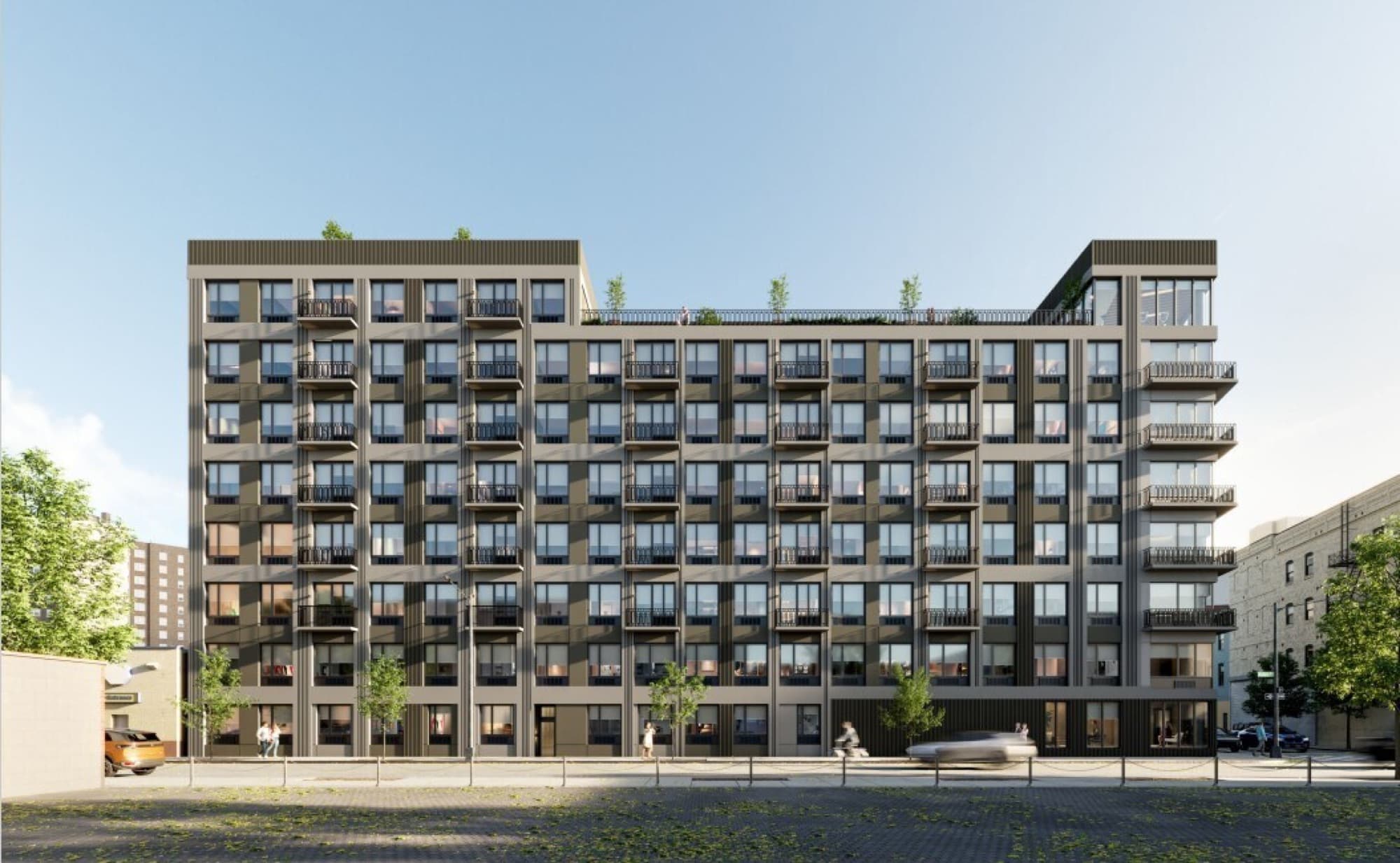
An architectural rendering of The Astelle: an eight-story brick building on Rider Avenue with oversized windows and stepped balconies
The Astelle at 286 Rider Avenue: an architectural rendering by Fischer Makooi Architects, red brick and oversized windows drawn in the language of the Piano District.

Fischer Makooi did not borrow the neighborhood's look; they continued it. The brick, the deep window reveals, the proportions: each reads as the next chapter of a story the streets have been telling for over a century. The building belongs to Mott Haven, rather than sitting on top of it.

Designed by Fischer Makooi Architects

See the building and its amenities

A neighborhood on the rise

Caught on the way up.

The honest question behind every neighborhood search is whether you are early or late. In Mott Haven the numbers say early. Along the Harlem River, Brookfield's Bankside has risen as a riverside community of seven towers and a public waterfront park, and a planned tower at 355 Exterior Street is set to become the tallest in the South Bronx. A decade of public and private investment has reshaped the riverfront and the side streets alike, and renters are choosing the neighborhood now for the value it still holds against Manhattan and Brooklyn prices.

Figures are approximate and drawn from NYC Department of Buildings permit data and published market reporting (NY1, BrickUnderground), 2021 to 2026. Confirm current figures before relying on them.

Schools and families

The Astelle sits in NYC Geographic District 7, where schools are choice-based rather than zoned to an address, so families apply across a range of options instead of being assigned by their door. Among the nearby elementary schools, PS 30 Wilton runs a dual-language English and Spanish program and shares its building with the American Dream Charter School, also dual-language, a natural fit for the neighborhood's many bilingual families. It is worth confirming current admissions and programs directly with each school as you weigh the choices.

Seeing it for yourself

Mott Haven is a neighborhood in active revitalization, shaped by significant public and private investment over the past decade, new parks, new buildings, and renewed streets. As with any urban neighborhood, the best way to know it is to walk it, and to review current public data for yourself before you decide.

Full-height balcony doors at The Astelle opening onto the Mott Haven streetscape in afternoon light

Come see it

The neighborhood reads best on foot.

See current availability, or arrange a private walk-through of the building and the streets around it at 286 Rider Avenue.

Before you go

See The Astelle in person.

Arrange a private tour of the residences, or ask Avery a question about availability, the neighborhood, or your move.

Schedule a Tour